Forest Path Review for Business Merch
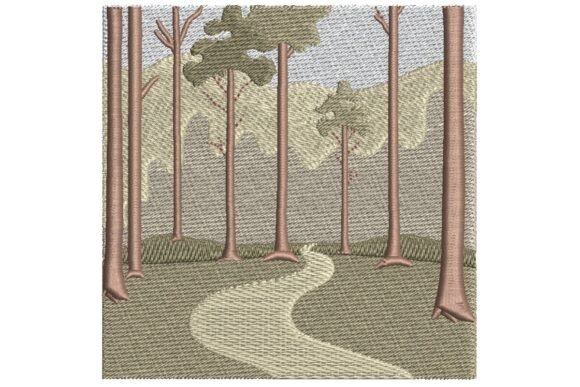
As an experienced embroidery designer who has spent years refining designs for commercial use, I often look at a new file and immediately ask: "Does this work for a brand?" Today, I am reviewing the Forest Path design. This piece promises a serene woodland scene with a winding path through tall trees. It is marketed as ideal for hiking-themed projects, nature lovers, and outdoor embroidery decor. But does it translate well from a digital file to a tangible asset for small business owners, Etsy sellers, and merch creators? Let us dive into how Forest Path performs in real-world scenarios.
First Impressions and Brand Personality
The moment you see the description of Forest Path, the visual personality becomes clear. It feels rustic yet professional, evoking a sense of calm and adventure. For a boutique, a creative studio, or a local bakery looking to add a touch of nature to their branding, this design offers a unique blend of elegance and approachability. It is not overly playful or cartoonish; instead, it leans towards a premium, handmade aesthetic that resonates with customers who value craftsmanship.
This design works exceptionally well for businesses that want to communicate stability and growth. The winding path suggests a journey, which is a powerful metaphor for customer loyalty and brand evolution. Whether you are a florist wanting to evoke the freshness of the outdoors or a pet brand seeking a natural vibe, Forest Path provides a sophisticated backdrop that elevates your brand identity. It signals to the buyer that your products are thoughtfully designed and rooted in quality.
Real-World Applications for Small Business
In my experience, the true test of any machine embroidery design is its versatility across different product types. Forest Path shows great promise for several key applications:
- Embroidered Patches: The clean lines of the winding path make it an excellent candidate for a sew-on patch. Imagine placing this on the back of a denim jacket for a hiking gear shop or as a logo accent on a canvas tote bag. The detail holds up well when scaled correctly, creating a memorable mark for customers.
- Staff Uniforms and Aprons: For cafes, bakeries, or florists, adding a subtle woodland motif to apron embroidery adds a layer of charm without overwhelming the staff's appearance. A small version of Forest Path on the chest pocket can serve as a subtle identifier that connects the team to the brand's values.
- Cap Embroidery: The curved surface of a cap requires careful consideration, but the organic flow of the path fits naturally on the front panel. It creates a custom apparel look that stands out against standard geometric logos.
- Tote Bag Design: A large-format application on a canvas tote bag allows the full serenity of the scene to shine. This is perfect for event merchandise or as a branded gift for loyal clients.
- Product Packaging Accents: Small details matter. Using this design as a decorative element on hang tags or product labels can elevate the unboxing experience, making your handmade product feel more exclusive.
Strategic Considerations and Limitations
While Forest Path is beautiful, a professional must know where to tread carefully. Not every surface is suitable for intricate embroidery. When considering this design for commercial embroidery, you must evaluate the following constraints:
Small Patch Sizes: If you plan to create very small patches (under 2 inches), the detailed outlines of the tall trees may blur together. High stitch density in small areas can cause the fabric to pucker, ruining the finish. Always test the design at your intended final size before mass production.
Curved Surfaces and Caps: Embroidering on the front of a cap involves significant curvature. Complex scenes like Forest Path can distort if the hoop size is not optimized or if the stabilizer is insufficient. Ensure the design is digitized specifically for curved surfaces to maintain the integrity of the path's winding shape.
Fabric Texture and Color: Dark uniforms or heavily textured fabrics can hide the subtleties of the design. If you are using dark thread colors, ensure there is enough contrast against the background fabric. Conversely, light threads on a white shirt might lack visibility. Always review thread colors against your specific fabric choices to guarantee legibility.
Wash Durability: Designs with high stitch counts require robust stabilization. Items that need frequent washing, such as work shirts or aprons, must be embroidered with proper techniques to prevent fraying or distortion over time. If the design is too dense, it may become stiff and uncomfortable after repeated laundering.
Impact on Customer Trust and Product Value
High-quality embroidery is a tactile signal of quality. When a customer receives a tote bag or a hat featuring a crisp, well-executed Forest Path, they perceive higher value in the product. This visual consistency builds customer trust and recognition. In the crowded marketplace of Etsy sellers and merch creators, a unique design like this helps your brand stand out.
A well-placed embroidered patch or a refined chest logo acts as a badge of authenticity. It tells the consumer that the business cares about details. This attention to detail translates directly to perceived professionalism. However, this only works if the execution is flawless. A poorly stitched design can have the opposite effect, making a brand look amateurish. Therefore, investing in a high-quality embroidery file and skilled production is non-negotiable.
Practical Designer Notes for Production
Before you commit to producing merchandise with Forest Path, follow these essential steps to ensure success:
- Test in Black and White: Convert the design to monochrome first. This helps you see if the composition holds up without relying on color contrast. If the shapes merge in grayscale, they will likely fail in embroidery.
- Check Stitch Density: Review the stitch density settings. Excessive density can lead to puckering, while too little can leave gaps. Ensure the design balances detail with structural integrity.
- Verify Hoop Size: Confirm the required hoop size for your machine. Large designs may require multiple hooping sessions, which can misalign the image. Check if the file supports multi-step digitizing for larger formats.
- Use Proper Stabilizer: The choice of stabilizer is critical. For heavy items like caps or thick canvas, use cut-away stabilizers to support the weight of the stitches. For lighter fabrics, tear-away may suffice, but always test on scrap material first.
- Create a Printable Mockup: Before ordering stock, generate a printable mockup to show clients or stakeholders. This allows for approval on placement and scale without wasting resources on physical samples.
- Compare Design Assets: Place Forest Path beside other elements of your brand kit. Does it harmonize with your typography and other graphics? Visual consistency is key to a cohesive brand identity.
- Confirm Commercial Licensing: Most importantly, verify the licensing terms of the digital embroidery file. Ensure you have the right to use the design for resale, including patches, uniforms, and promotional items. Do not assume standard licenses cover all commercial uses.
Forest Path is a versatile tool for any business looking to infuse a sense of nature and tranquility into their merchandise. By understanding its strengths and limitations, you can leverage this design to create products that not only look beautiful but also reinforce your brand's story. Whether you are decorating a custom apron or launching a line of branded patches, take the time to test, refine, and execute with precision. Your customers will notice the difference.